The 1031 exchange clock
The 45-day and 180-day deadlines for a 1031 exchange, with a date calculator, for C-store sellers and buyers.
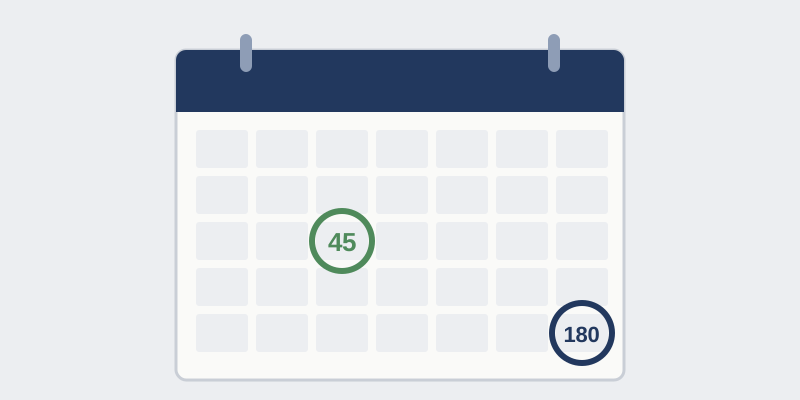
A 1031 exchange lets you sell investment or business real estate and put the gain into replacement real estate without paying tax on it now. It runs on a clock that starts the day you close your sale and does not stop for weekends, holidays or a slow lender. Miss a date and the exchange fails. On a C-store there is a second trap: only part of what you are selling can go into the exchange at all.
The two deadlines
Both come from the IRS's 2025 Instructions for Form 8824, Like-Kind Exchanges (dated Dec. 2, 2025).
- Day 45. Replacement property must be identified within 45 days after you transfer the property you are giving up.
- Day 180, or sooner. Replacement property must be received within 180 days, or by the due date of your tax return for that year including extensions, whichever is earlier.
The two periods run at the same time. Day 180 is counted from the same sale date as day 45, not from the end of the identification period.
A dated example
Here is an illustration, not advice. Say you close the sale of your store's land and building on Nov. 16, 2026.
| Date | Day | What happens |
|---|---|---|
| Nov. 16, 2026 | 0 | Your sale closes. The qualified intermediary receives the proceeds. You never touch them. |
| Late Nov. 2026 | About 1 to 14 | You and your broker narrow down replacement properties and start talking to sellers. |
| Dec. 31, 2026 | 45 | Your written identification of replacement property must be delivered as your exchange documents require. This is New Year's Eve, and nobody gets an extra day for it. |
| Early 2027 | 46 onward | Contracts, inspections, financing. You can only close on property you identified. |
| April 15, 2027 | The usual deadline for most individual returns. If you do not extend, your exchange window ends here, a month before day 180. | |
| May 15, 2027 | 180 | The last possible day to close, if you extended your return. |
That fall closing is the classic way exchanges die. The seller assumes 180 days, does not file an extension, and finds out in April that the window closed with the filing deadline. If your sale closes in the back half of the year, talk to your CPA about an extension before the new year.
What counts as like-kind on a fuel deal
Since 2018, per the same IRS instructions, like-kind exchange treatment applies only to real property held for use in a trade or business or for investment. Property held primarily for sale does not qualify.
For a C-store sale that splits the deal in two:
- The land and building can go into an exchange.
- The business, its goodwill, inventory and equipment cannot. Gain on those parts is taxed as it normally would be.
Some items sit in a gray area. Underground tanks, canopies and dispensers are attached to the land, but whether each is real property for exchange purposes is a question for your CPA, not your broker. How you and the buyer allocate the price between real estate, equipment, inventory and goodwill in the purchase contract matters a great deal, for both sides, and should be settled before you sign.
If you own the real estate and are deciding whether to sell it with the business, read business only, or the land too? first.
The qualified intermediary
You cannot receive the sale proceeds yourself, even for a day, and still have a valid exchange. A qualified intermediary (QI) holds the money between your sale and your purchase and handles the exchange paperwork. The QI has to be in place before your sale closes, and the exchange language has to be in your closing documents. Bringing one in after closing is too late.
Choose the QI the way you would choose anyone holding a seven-figure check: ask how funds are held, whether they are bonded or insured, and who signs to release money.
Exchange buyers on the other side
Exchange money is a big part of the buyer pool for net leased fuel and convenience property. An investor on the 45-day clock needs to find property fast and close by a hard date. That makes them motivated, but also brittle: if your deal looks like it might slip past their day 180, they will move on to something else.
If you own your store's real estate and want to stay in the business, a sale lease back puts your land in front of exactly those buyers. If you are the exchange buyer, a store on a long lease to an established operator is the usual target. Either way, see Buy and Value.
Before you start
- Line up a CPA who has handled exchanges before you list, not after you accept an offer.
- Put a QI under contract before closing.
- Start looking at replacement property before your sale closes. Forty-five days goes fast when you are also handing over a store.
- Decide early how you want the price allocated.
- Know which deadline governs your exchange: day 180 or your filing date.
The IRS adds one more piece: Form 8824 is filed with your return for the year the relinquished property was transferred.
Tax rules have exceptions and details this page does not cover. Before you sign anything, have your CPA review the tax side and your qualified intermediary set up the exchange.
Enter your sale closing date below to see your day 45 and day 180.
1031 dates
Day 45, identify replacement property by:
Day 180, close on it by:
The 180-day limit shortens if your tax return for the year of the sale comes due first (extensions count). Confirm both dates with your qualified intermediary and CPA.